What Tunnels Beach actually is, and why it isn’t on Viator
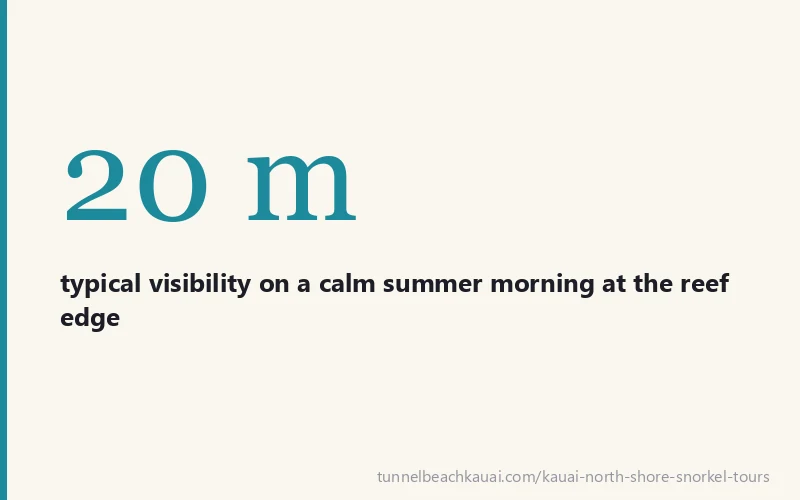
Tunnels Beach (locally Makua) is a half-mile crescent of golden sand on Kauai’s north shore, fringed by a maze of lava-tube reef channels that give it the name. On a calm summer morning, the water inside the reef is mid-twenties Celsius, the visibility runs 20 metres or better, and you can drift the channels watching honu (green sea turtles) feed on the algae mats. It is the most-photographed reef on Kauai and the consensus-pick for the island’s best shore-based snorkel.
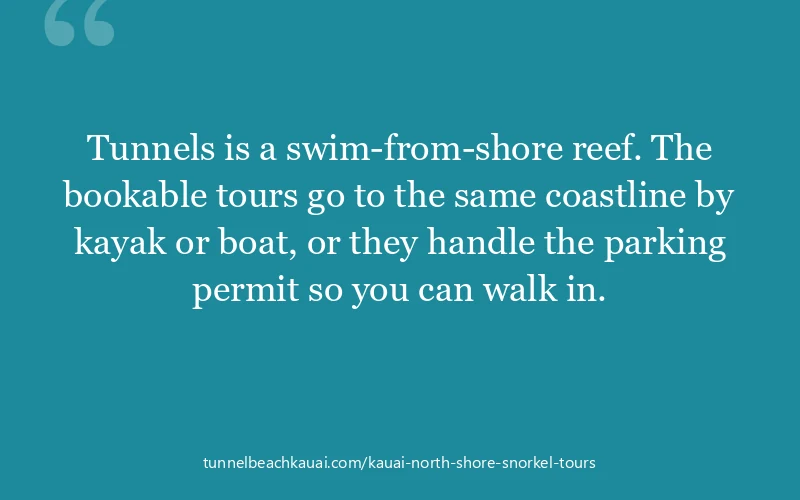
It is also a swim-from-shore destination, not a guided tour. The Viator catalog has zero products specifically titled “Tunnels Beach snorkel tour.” What it does have is a small but specific menu of north-shore boat and kayak tours that snorkel the same reef system from the water side, plus pickup tours that handle the Hāʻena State Park reservation for you so you can walk in with a parking spot.
This guide covers those tours, the May-September weather window that gates the best snorkeling, and the practical decisions a first-time visitor doesn’t know to ask about.
How north-shore snorkel tours actually work
The reef edge that snorkellers want is on the outer rim of the bay, where the lava channels open into the Pacific. Three formats reach it:
- Kayak-and-snorkel (from Hanalei): paddle 30-45 minutes from Hanalei harbor to the reef, snorkel for an hour, paddle back. Most family-friendly, lowest seasickness risk, and cheapest.
- Boat-and-snorkel (catamaran or zodiac): motor out from Hanalei or Anini, anchor at the reef, snorkel for 60-90 minutes, motor back. More in-water time, less paddling.
- Hāʻena pickup tours: not snorkel tours per se, but vehicles from Lihue or Kapaa hotels that include the State Park reservation, so you bypass the parking lottery. Then you swim from shore at Tunnels itself.
The first two are bookable on Viator and listed below. The third is bookable as a “Hāʻena State Park transfer” rather than a snorkel tour, and it’s the cheapest way for a first-time visitor without a 4x4 to actually get to Tunnels.
The May-September window that gates everything
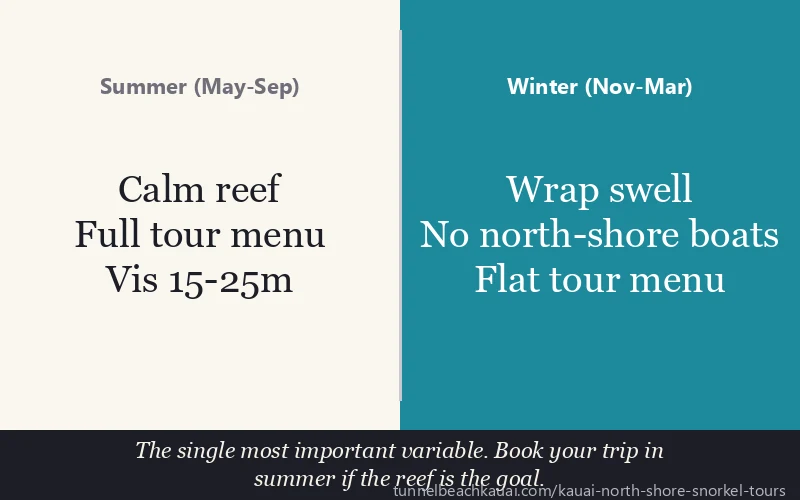
Kauai’s north shore is on the wrong side of the island for trade-wind protection. From late October through April, north Pacific swell wraps around the island and turns the reef edge into surf. Boats stop running, the reef edge is too rough to snorkel, and even the inner reef gets murky from sediment kicked up by the swell.
May through September is the calm window. June, July, and August are the peak: glassy water in the morning, mild trade-wind chop in the afternoon, no swell. Tour operators run their full schedule. Visibility can reach 25 metres on a still morning.
April and early October are the shoulders: usually fine but check the surf forecast 24-48 hours before. November through March: don’t book. The catamaran operators won’t sail to the reef edge; the kayak tours will refund you.
The north shore’s snorkel spots, ranked
Before the tours: where the snorkeling actually is. Five names come up in every north-shore conversation. They are not interchangeable, and one of them is not really a snorkel spot at all.
1. Tunnels Beach (Makua). The best shore snorkel on Kauai, and the reason this site exists. The lava-tube channels that name the beach hold the island’s densest inner-reef fish life, honu graze the algae mats, and the inner lagoon is shallow enough for nervous beginners while the outer reef edge rewards confident swimmers. No facilities at the beach itself and no reservation required: park at Hāʻena Beach Park next door and walk in along the sand. Summer only. Our Tunnels Beach guide covers entry points, parking, and today’s conditions.
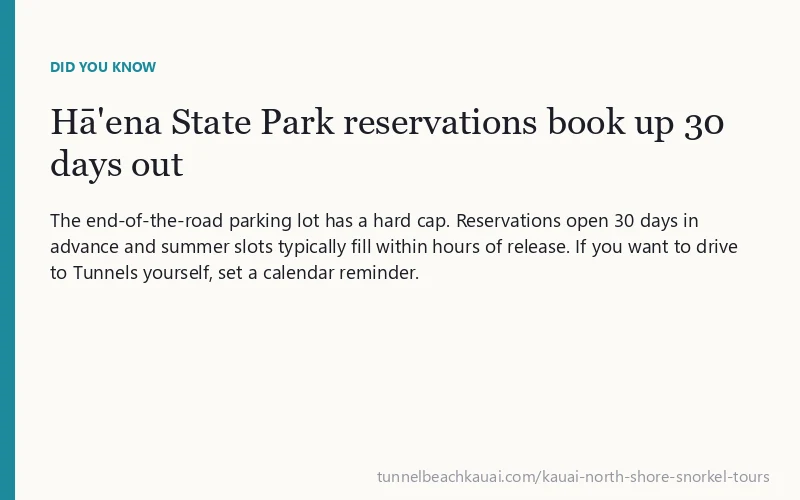
2. Ke’e Beach. The lifeguarded lagoon at the literal end of the road, inside Hāʻena State Park, which means it requires the Hāʻena State Park reservation that sells out 30 days ahead. The reef sits close to shore, the facilities are the best on this coast, and you can pair the swim with the first Kalalau Trail viewpoints. Summer only.
3. Anini Beach. The calm-water pick. Anini sits behind the longest fringing reef in the Hawaiian Islands (roughly 2.5 miles), which knocks down swell that closes everything else, so it is often snorkelable on days Tunnels is blown out. The trade-offs: most of the marine life hangs about 60 yards out near the reef’s edge, low tide makes the lagoon awkwardly shallow, and there is no lifeguard. The kid-friendliest water on the north shore.
4. Hideaways (Pali Ke Kua). The effort pick, below Princeville. A steep scramble of a trail keeps the crowds out; the reward is a spur-and-groove reef in 10 to 15 feet of water and the least-crowded good snorkel on this coast. No facilities, minimal parking, summer only, and skip it entirely after rain when the trail turns to clay.
5. Hanalei Bay: the honest answer. People constantly ask about snorkeling Hanalei Bay, and the honest answer is that the bay itself is a mediocre snorkel: it is a two-mile sandy-bottom crescent built for surfing, paddling, and beach days, not reef viewing. There is some reef toward the Waikoko (west) end that works on flat summer days, but visibility rarely rewards the effort compared with Tunnels or Anini. Hanalei’s real role in a snorkel trip is as the launch harbor: the kayak-and-snorkel and boat tours below depart from here and take you to the reef edge that the bay itself lacks.
One winter note: from November through March, none of the spots above are reliably safe. That is the season to snorkel the south shore (the Poipu side) and to see this coast by boat from the water on the days conditions allow.
Kid-friendly versus advanced
The kayak-and-snorkel format takes kids from ~age 6 (sit-on-top tandems, life jackets, calm water inside the bay). Boat-and-snorkel catamarans typically rate 5-and-up; zodiac (raft) tours rate 8 or 10 and up because of the wet, fast ride.
For ages 4 and under, none of the tours below are appropriate. The realistic option is to walk into Tunnels itself with a Hāʻena reservation and snorkel from shore at low tide, with an adult holding the child by the rashguard. Bring an inflatable child-sized float ring; it solves the panic-when-fins-touch-coral problem.
Three things first-time snorkellers always ask wrong
“What gear do I need to bring?” Tour operators provide mask, snorkel, and fins. Quality varies. If you’re particular, bring your own mask and snorkel; rentals are mostly fine but kids’ masks can leak on small faces. Reef-safe sunscreen (oxybenzone-free) is mandatory and brought-it-yourself; the Hawaii reef-safe-only law took effect in 2021 and operators now check.
“How much time do I actually spend in the water?” Less than the brochure copy implies. A 4-hour kayak-and-snorkel tour is roughly 2 hours of paddling, 60 minutes of snorkelling, 30 minutes of beach lunch, 30 minutes of safety briefings and gear handling. A 4-hour boat tour: 60 minutes of motoring, 90 minutes at anchor (snorkel + lunch), 30 minutes of return motor, the rest is briefings and boarding.
“Do I need to be a strong swimmer?” For tour-format snorkelling: no, but you need to be comfortable in open water with your face down. The reef edge is in 2-4 metres of water and you wear a flotation vest. If you’ve never snorkelled before, the kayak-and-snorkel format is more forgiving than the boat tour because it stages you in shallower water first.
How we picked these tours
We started with every Kauai snorkel tour we could find on Viator and kept only those that actually anchor to the north-shore reef system: Hāʻena, Hanalei, Anini, and Princeville. Tours that snorkel only the south or east coast dropped out, even when they include a snorkel stop in the brochure, because Poʻipū’s calm waters are a different reef altogether and not a Tunnels-area substitute.
Inside each location, the running order is roughly what locals would tell you to book first: tours that consistently sell out, operators with hundreds of recent reviews and 4.8-plus ratings, and the ones with free cancellation so a swell day doesn’t cost you the booking. Shorter kid-friendly formats sit next to the longer reef-edge tours so families and divers can compare without scrolling past each other.
You can also open the interactive Kauai map and type “snorkel” in the search to see how the north-shore picks compare against the rest of the island.