 Menu
Menu
Menu
Menu
Makua Beach • North Shore
From Ancient Legends to Hawaii's 'Separate Kingdom'
Unlike the other Hawaiian islands, Kauai was never conquered by King Kamehameha the Great in battle. Its history is defined by resistance and diplomacy, leading to its nickname "The Separate Kingdom." This independent spirit persists in the island's culture today, shaped by centuries of distinct political maneuvering, the earliest contact with Western explorers, and a dramatic economic shift from industrial sugar production to global tourism.
Before recorded history, Kauai was the setting for some of Hawaii's most enduring legends, particularly those of the Menehune - a mythological race of small, master builders who were said to construct massive engineering feats in a single night.
Location: Waimea
This irrigation ditch features 120 finely cut basalt blocks. The stone-cutting technology is unique and does not appear elsewhere in the Hawaiian islands, leading archaeologists to debate its true origins while legend attributes it to the Menehune.
Location: Near Lihue
This 900-foot-long wall separates the Huleʻia River from the pond. Legend says the Menehune built it overnight by passing stones hand-to-hand in a line stretching 25 miles from the quarry. It is estimated to have been built in the 15th century.
Kauai was the first point of contact between the Hawaiian Islands and the Western world.
On January 20, 1778, Captain James Cook of the British Royal Navy landed at the mouth of the Waimea River. This event introduced Hawaii to the rest of the globe and forever altered the islands' trajectory.
Cook's crew traded iron nails for fresh water, pigs, and sweet potatoes. This initial contact was peaceful on Kauai, unlike his fatal return to the Big Island of Hawaii a year later.
While Kamehameha the Great conquered the other islands through warfare, Kauai remained independent under King Kaumualiʻi.
Kamehameha attempted to invade Kauai twice:
In a bid to maintain independence, King Kaumualiʻi formed a secret alliance with the Russian-American Company in 1816. He allowed Dr. Georg Anton Schäffer to build a fort in Waimea (Fort Elizabeth), flying the Russian flag in hopes that the Tsar would protect Kauai from Kamehameha. The Tsar eventually rejected the alliance, and the fort was abandoned.
Realizing invasion was inevitable, Kaumualiʻi negotiated a peaceful surrender to Kamehameha in 1810. He ceded the island but was allowed to govern it as a tributary kingdom until his death.
Kauai is the birthplace of Hawaii's commercial sugar industry, which drove the islands' economy for over a century and created its multi-ethnic population.
Founded in 1835 by Ladd & Company, this was the first commercially successful sugar plantation in all of Hawaii. It set the precedent for the plantation system that would dominate the islands.
To work the fields, plantations imported labor from China, Japan, Portugal, the Philippines, and Korea. This influx created the "local" melting pot culture and pidgin language found on Kauai today.
The sugar industry slowly collapsed due to global competition. Gay & Robinson, the last major sugar operation on Kauai, ceased sugar processing in late 2009. (Note: The very last sugar mill in the state closed on Maui in 2016).
In the late 20th century, Kauai's economy transitioned from agriculture to tourism, a shift punctuated by natural disasters and pop culture fame.
Kauai's dramatic scenery has made it a favorite for filmmakers:
On September 11, 1992, the most powerful hurricane in Hawaii's recorded history struck Kauai directly.
| Event | Date | Significance |
|---|---|---|
| Captain Cook's Arrival | 1778 | First European contact with Hawaii (Waimea) |
| Cession to Kamehameha | 1810 | Kauai joins the Kingdom of Hawaii peacefully |
| Kōloa Plantation Opens | 1835 | Birth of Hawaii's sugar industry |
| Hurricane Iniki | 1992 | Devastating Cat-4 storm; ends old tourism era |
| Last Sugar Harvest | 2009 | Gay & Robinson ends sugar ops; focus shifts to tourism |
Ready to visit the places that shaped Kauai's history? Use our interactive map to find all the major historical sites, scenic viewpoints, and cultural landmarks across the North Shore and beyond.
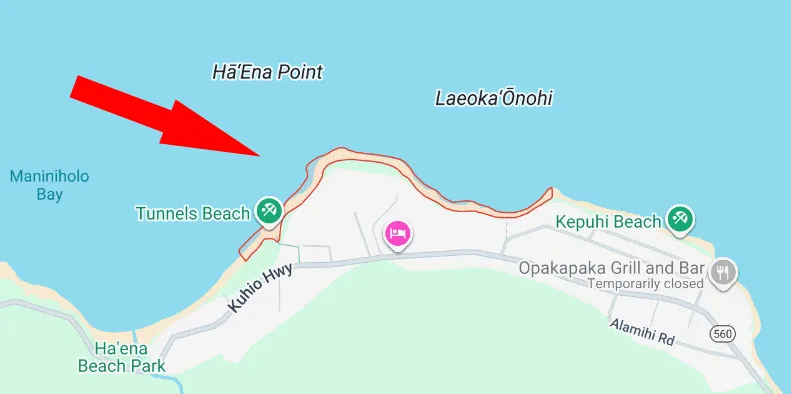
📍 Click to explore our Interactive Map
Discover 15+ historical sites, destinations & tour bookings
Understanding Kauai's history—from the legendary Menehune to Captain Cook, from King Kaumualiʻi's independence to the sugar boom and modern tourism—enriches your visit. The island's "separate kingdom" spirit still resonates in its culture, landscape, and warm aloha spirit. When you visit Tunnels Beach or explore the North Shore, you're walking through centuries of Hawaiian heritage and resilience.